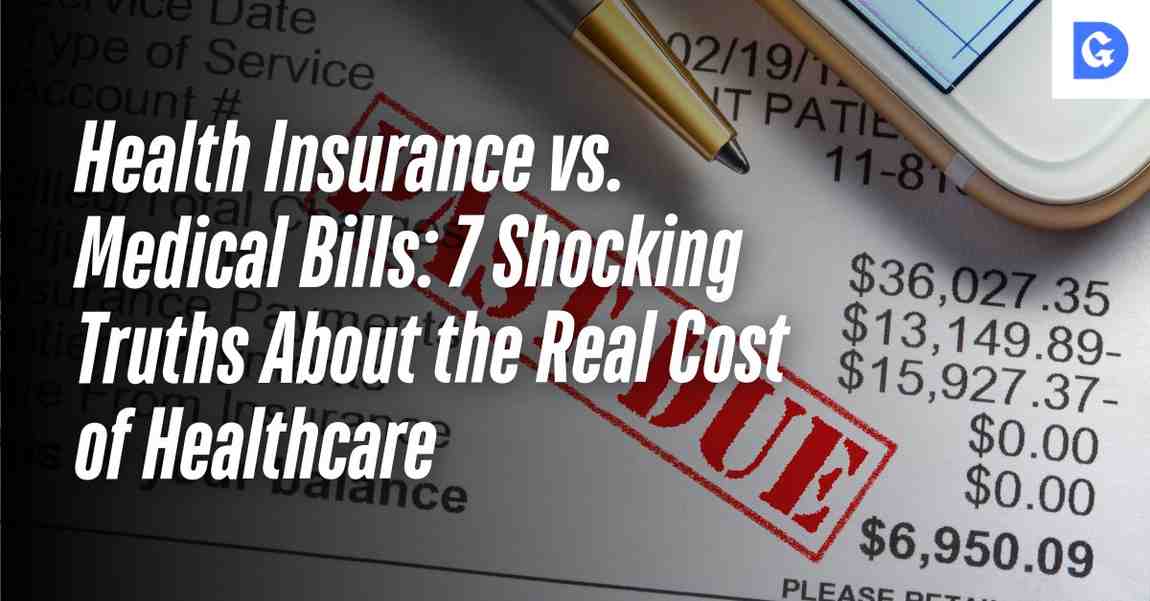
Health Insurance vs. Medical Bills: 7 Shocking Truths About the Real Cost of Healthcare

Envision receiving a $10,000 medical bill following an unexpected accident. It occurs more frequetly than you might think. Healthcare expenses can be a significant burden. Should you invest in health insurance or risk bearing medical bills out-of-pocket? Health insurance involves monthly premiums, deductibles, and copays. Paying medical bills directly means you settle costs as they arise. But which method truly incurs more expense over time? Let’s investigate in detail.


Comprehending Health Insurance Costs

Health insurance can be perplexing. Various plans are available, such as HMOs, PPOs, and high deductible options. Each comes with distinct cost implications. Some plans feature higher premiums but reduced out-of-pocket costs. Others have lower premiums but greater deductibles. Choosing the appropriate plan for your healthcare needs and budget is essential to avoiding financial strain.


Premiums: Your Monthly Commitment

Premiums are the monthly payments made for health insurance. Consider it as a membership fee. Various factors influence premiums, including plan type, coverage level, age, location, and tobacco use. For instance, a young individual in a state with good health might pay less than an older individual in a state with high healthcare expenses.

In Texas, average premiums fluctuate between $400 to $700 monthly, depending on your plan and age. Annually, this amounts to several thousand dollars. But how does this compare with direct medical bill payments? Let’s delve deeper.


Deductibles, Copays, and Coinsurance: Distributing the Cost

Premiums are not the sole expense you will encounter. Deductibles, copays, and coinsurance emerge when you require medical attention.

Deductible: The sum you need to pay before your insurance begins covering expenses. Some plans have deductibles as low as $500, while others feature high-deductible plans exceeding $5,000.
Copay: A fixed charge for specific services, such as a doctor’s appointment. A visit might set you back $30, while an emergency room visit may incur a $250 copay.
Coinsurance: The percentage owed for medical services after reaching your deductible. If your coinsurance rate is 20%, you will pay 20% of your medical costs while insurance covers the remainder.

Grasping these expenses is crucial for comparing health insurance to direct medical bill payments.

Concealed Costs and Considerations

Health insurance is not always straightforward. There may be hidden expenses, such as:

Out-of-network care: Consulting a doctor outside your insurance
network can result in significantly higher costs.
Prior authorizations:Certain treatments require preapproval,
potentially delaying care.
Coverage limits: Some plans impose restrictions on coverage, necessitating out-of-pocket payments for specific services.

Careful examination of your plan details helps you avoid unpleasant surprises.

The Reality of Paying Medical Bills Directly

Opting out of health insurance is a risk. You might save on premiums, but you expose yourself to severe financial risks. A single accident or illness could lead to overwhelming debt.

Routine Care vs. Emergency Situations

Paying out-of-pocket for routine care may appear manageable. Annual check-ups and basic healthcare visits can be reasonably priced. However, emergency situations are quite different. Ann unexpected illness or accident needing hospitalization can cost thousands. If uninsured, you will be liable for the total bill.

A broken leg: could cost $7,500.
Hospitalization for pneumonia: can exceed $20,000.
Cancer treatment: costs can reach from $50,000 to over $100,000.

These examples highlight how expensive medical care can be without insurance.

Negotiating Medical Bills: A Possible Solution

If you encounter substantial medical bills, consider negotiating with the healthcare provider. Numerous hospitals and physicians are open to reducing their charges.

Request an itemized bill.
Search for billing inaccuracies.
Ask for a cash discount.
Establish a payment plan.
Consult a patient advocate.

While these strategies may assist, they do not eliminate the financial dangers of being uninsured.

The Effect on Credit and Financial Stability

Unpaid medical bills can severely impact your credit rating. Collection agencies may take legal measures. Medical debt can complicate securing loans, renting a home, or obtaining financing for significant purchases. Protecting your credit is crucial.


Side-by-Side Comparison: Scenarios and Examples

Let’s analyze a few real-life scenarios to understand how health insurance stacks up against directly paying medical bills.

Scenario 1: The Unexpected Emergency Room Visit

Imagine needing to visit the ER after a car accident.

With health insurance: You might pay a $250 copay and meet your deductible.
– Without insurance: An ambulance ride could cost $1,000, doctor’s fees several hundred dollars, and tests and procedures could total thousands more. The total bill could easily surpass $10,000
These are merely a handful of instances illustrating how expensive medical care can be without insurance.

Negotiating Medical Bills: A Possible Solution

If you encounter substantial medical bills, consider negotiating with the healthcare provider. Numerous hospitals and physicians are open to reducing their charges.

Request an itemized statement.

Look for billing mistakes.

Seek a cash discount.

Establish a payment plan.

Consult with a patient advocate.

While these methods may assist, they do not eliminate the financial hazards of lacking insurance.

The Effect on Credit and Financial Security

Unpaid medical bills can significantly damage your credit score. Collection agencies may initiate legal proceedings. Medical debt can complicate acquiring loans, renting an apartment, or obtaining financing for significant purchases. Safeguarding your credit is vital.

Comparative Analysis: Scenarios and Illustrations

Let’s look at a few real-life situations to understand how health insurance contrasts with directly paying medical bills.

Scenario 1: The Unanticipated Emergency Room Visit

Imagine you need to visit the ER following a car accident.

With health insurance: You might pay a $250 copay and reach your deductible.

Without insurance: An ambulance ride may cost $1,000, doctor’s fees several hundred dollars, and tests and procedures could add thousands more. The total bill could easily surpass $10,000.

Scenario 2: Managing a Chronic Condition

Consider an individual managing diabetes.

With insurance: Medications are included, doctor visits are more economical, and hospital stays are covered.

Without insurance: Insulin alone may cost hundreds monthly, doctor’s visits accumulate, and the potential for financial pressure is high.

Scenario 3: Preventive Care and Wellness

Health insurance covers numerous preventive services, such as yearly check-ups, vaccinations, and screenings. Without insurance, individuals might skip these services, leading to more severe health issues later.

Making the Right Decision for Your Health and Finances

Deciding between health insurance and direct medical bill payments necessitates careful consideration. Assess your healthcare requirements and financial circumstances.

Assessing Your Healthcare Needs

Do you have any chronic illnesses?

Do you require regular medications?

Are you active and susceptible to injuries?

Do you foresee any significant medical procedures?

Understanding your health requirements assists you in determining the level of coverage you need.

Evaluating Your Budget and Risk Tolerance

Can you manage monthly premiums?

Do you have funds set aside for unexpected medical costs?

How much financial risk are you prepared to accept?

Balancing cost-effectiveness with risk is essential. A high-deductible plan might be appropriate for a healthy person, whereas comprehensive coverage may be preferable for those with ongoing medical needs.

Exploring Available Options and Resources

Employer-sponsored health plans typically offer better rates.

Government marketplaces (like HealthCare.gov) present a variety of plans.

Community health centers can provide affordable care choices.

Comparing plans and investigating available resources aids in finding the best coverage for your finances.

Emphasizing Health and Financial Well-being

Health insurance shields you from overwhelming medical expenses. Paying medical bills directly places you at financial risk. While insurance may appear costly, it can ultimately save you money and grant peace of mind. Thoughtfully assess your options and select a path that emphasizes both your health and finances. Consider the long-term advantages—because investing in health coverage today can avert financial troubles tomorrow..

also checkout What Happens If You Don’t Have Health Insurance?
 

What Happens If You Don’t Have Health Insurance? 5 Costly Consequences You Can’t Ignore

Ever thought about what occurs when that unanticipated medical bill arrives in your mailbox Perhaps it’s a fractured arm, or maybe just a severe flu. The expenses can be astonishing, and if you lack coverage, it can feel like sinking into debt. This is a rising concern. An increasing number of individuals are without health insurance, jeopardizing everything. That’s where we come in. This guide will clarify the repercussions of being uninsured. It’s about your wellness, your finances, and your future.


The Financial Risks of Being Uninsured
Not having health coverage isn’t merely a risk to your well-being; it’s a financial balancing act. The immediate impact can be substantial. The long-term consequences can be disastrous. Let’s examine the monetary hazards of being without insurance.

Unexpected Medical Bills and Debt

What Happens If You Don’t Have Health Insurance? 5 Costly Consequences You Can’t Ignore

Healthcare in the U.S. can be incredibly costly. Even a seemingly minor injury can lead to significant debt. Picture this: you trip and fracture your wrist. An emergency room visit, X-rays, and a cast can easily add up to thousands of dollars. Without insurance, that whole bill is your liability. Some procedures can leave you staggering. A surgery might run into tens of thousands. A hospital stay? Even more. Many uninsured individuals find themselves facing bankruptcy due to medical debts.

Difficulty Accessing Preventative Care
Neglecting your annual check-up may seem harmless now. However, lacking insurance frequently means postponing or avoiding essential preventive care. This can result in larger health issues in the future. Preventive screenings, like mammograms and colonoscopies, catch illnesses early. Early detection often translates to more manageable conditions. Delaying these visits due to lack of coverage can be pricey in the long run. The cost of overlooking problems is far superior to the price of insurance.

Impact on Credit Score and Financial Stability
Medical debt can devastate your credit score. A damaged credit rating can complicate life. You might find it difficult to secure a loan for a car or a home. Landlords may decline your rental application. Some employers even examine credit scores before hiring. Unpaid medical bills can remain on your credit report for years, affecting your financial stability. Being uninsured creates a chain reaction of financial difficulties.

The Impact on Your Health
Lacking health coverage affects more than just your finances. It directly influences your health. You might delay visiting a doctor when necessary. This can lead to serious health concerns and poorer outcomes. Let’s delve into the health-related ramifications.

Delayed or Avoided Medical Care

What Happens If You Don’t Have Health Insurance? 5 Costly Consequences You Can’t Ignore


Without insurance, many people often postpone or skip a doctor visit. Even when they have concerning symptoms. Perhaps you’re experiencing chest discomfort. Or a persistent cough. The fear of an enormous bill keeps individuals away. Delaying care allows conditions to escalate. What begins as a controllable issue can develop into a life-threatening crisis.

Increased Risk of Chronic Conditions
Avoiding preventive care increases your chances of developing chronic illnesses. Illnesses like diabetes, heart disease, and cancer. Without consistent check-ups, these conditions can remain undetected until they advance. Managing chronic illnesses necessitates ongoing care and medication, which, without insurance, becomes an unaffordable burden.

Higher Mortality Rates
Research shows a correlation between being uninsured and elevated mortality rates. Lack of access to timely and suitable healthcare can be fatal. Individuals without coverage are more prone to die from treatable conditions. They frequently miss crucial life-saving treatments. Access to healthcare is not just about quality of life; it can be about life itself.

Understanding Your Options for Coverage
Feeling overwhelmed? Don’t fret. There are ways to secure health insurance. Let’s investigate some options for obtaining coverage. You might qualify for more than you think.

The Affordable Care Act (ACA) Marketplace
The ACA marketplace provides health insurance plans to individuals and families. Enrollment periods occur each year. Subsidies are available to assist in reducing your monthly premiums. Your income determines your eligibility. This marketplace offers a way to obtain affordable health coverage. Don’t overlook this opportunity.

Medicaid and CHIP
Medicaid and CHIP deliver coverage to low-income individuals and families. Medicaid offers healthcare to adults, children, and those with disabilities. CHIP works on providing low-cost coverage for children. Each state has its own eligibility criteria. These programs can be a lifeline for those who cannot afford other options.

Employer-Sponsored Health Insurance
Many employers provide health insurance to their staff. This is often the most cost-effective method to gain coverage. Employers usually subsidize part of your monthly premiums. Employer sponsored plans offer a wide array of benefits. Check with your employer to find out what’s available.

Resources for the Uninsured
Navigating the healthcare system without insurance can seem impossible. Fortunately, resources exist to assist. These resources provide access to affordable or free care. It’s essential to know where to seek help.

Community Health Centers
Community health centers offer care to everyone, regardless of their financial ability.  They provide a variety of services. From general health care to psychological support services. Costs are frequently determined by your earnings. They act as a safety net for those without insurance.

Free Clinics
Free clinics provide medical services at no expense. These clinics depend on volunteer medical professionals. They offer essential health care, evaluations, and referrals. They can be an excellent choice when you can’t afford other treatment.

Pharmaceutical Assistance Programs
Numerous pharmaceutical companies provide programs. These initiatives assist individuals in affording their prescriptions. They offer discounts or complimentary medications to those who meet the criteria. Visit the drug manufacturer’s website to find out if help is available.


Being uninsured poses significant financial and health threats. Unforeseen medical expenses can result in debt and bankruptcy. Insufficient access to healthcare can cause chronic illnesses and increased mortality rates. It is crucial to have health insurance. Investigate your options through the ACA marketplace, Medicaid, or employer-sponsored plans. Do not delay. Ensure your health and financial stability today. Look for health insurance coverage now.

Also, Checkout Top 5 Mistakes in Health Insurance That Can Lead to Major Costs!


Top 5 Mistakes in Health Insurance That Can Lead to Major Costs!

Ever received a medical invoice that left you speechless? Mistakes in Health Insurance It occurs. One moment, you’re feeling great. The next, you’re confronted with a staggering number and pondering how to cover it. Health insurance can be a lifesaver. But making incorrect choices with it? That can result in significant expenses.

Healthcare expenses are increasing. It’s more crucial than ever to comprehend your health insurance. Knowing what to do can shield you from unforeseen costs. What are the most common errors people make? We’ll explore the top 5 Mistakes in Health Insurance.

This piece aims to assist you. Continue reading to discover how to steer clear of these expensive mistakes. Let’s ensure your health insurance benefits you.

Mistake 1: Selecting the Incorrect Plan

Top 5 Mistakes in Health Insurance That Can Lead to Major Costs!


Opting for the wrong health insurance plan? or to do Mistakes in Health Insurance. This can pave the way for financial challenges. It’s akin to using the wrong tool for a task. It simply won’t function properly. Let’s dissect the various types of plans.

Understanding Various Plan Types (HMO, PPO, EPO, HDHP)
It might resemble an alphabet soup. Each plan operates differently. Here’s the breakdown:

HMO
(Health Maintenance Organization): Lower expenses, but less flexibility. You require a primary care physician. Referrals are necessary to consult specialists. Seeking care outside the network? Generally, it won’t be covered.

PPO
 (Preferred Provider Organization): 
More flexibility, but higher costs. No primary care physician is needed. You can see any specialist you wish. Out-of-network care is possible, but it will be costlier.

EPO
(Exclusive Provider Organization): A blend of both. No referrals are required. But you must remain within the network. Out-of-network treatment isn’t covered, except for emergencies.

HDHP
 (High Deductible Health Plan): 
Low premiums, high deductible. This means you’ll pay more out-of-pocket initially. HDHPs often work alongside a Health Savings Account (HSA). You can set aside tax-free money for healthcare. Which plan suits you best? Consider what’s most important. Cost? Flexibility? Access to medical providers?

Neglecting Your Healthcare Needs and Usage
Don’t choose a plan arbitrarily. Reflect on your health requirements. Do you have a chronic illness Do you frequently visit the doctor? What about medication?

Estimate your healthcare utilization for the upcoming year. How many times will you see the doctor? How many prescriptions will you require? This helps in selecting a plan that meets your needs without straining your finances.

Focusing Only on the Premium
The premium is your monthly payment. Don’t just focus on that figure. It’s tempting to pick the lowest premium. But that can lead to pitfalls!

Examine the entire scenario. What’s the deductible? What are the copays? What’s the coinsurance? What’s the maximum out-of-pocket expense? A low premium might mean high costs down the road. Consider all financial aspects.

Mistake 2: Failing to Grasp Your Policy

Top 5 Mistakes in Health Insurance That Can Lead to Major Costs!


Your health insurance policy? It’s not light reading. Yet, it’s vital! Not comprehending it can result in difficulties. Major Mistakes in Health Insurance difficulties.

Clarifying Key Terminology (Deductible, Copay, Coinsurance, Out-of-Pocket Maximum)
These terms can be perplexing. Let’s clarify:

Deductible: The amount you pay before insurance activates. Assume your deductible is $2,000. You’ll cover the first $2,000 of healthcare expenses. Then, your insurance begins paying. Copay: A fixed sum you pay for a service. For instance, $20 for a doctor’s visit. You pay this amount each time, regardless of the total visit cost.

Coinsurance: A percentage you pay for a service. Suppose your coinsurance is 20%. After meeting your deductible, you pay 20% of the expense. Insurance takes care of the remaining 80%.

Out-of-Pocket Maximum: The maximum you’ll pay annually. This includes deductibles, copays, and coinsurance. Once you hit this limit, insurance covers 100% of eligible services. Here’s an instance You have a $1,000 deductible, $30 copay, 20%  coinsurance, and a $6,000 out-of-pocket maximum.

You receive a bill for $5,000. You cover the first $1,000 (deductible). Then, you pay 20% of the remaining $4,000 (coinsurance), totaling $800. Your overall out-of-pocket cost is $1,800.

Not Understanding What’s Covered (and What Isn’t)
Be aware of what your policy includes. Also, recognize what it excludes. Certain services might be omitted. This could involve cosmetic treatments or experimental procedures.

Review the fine print. Grasp the limitations. Don’t take for granted that everything is included.

Unawareness of Your Network
Insurance providers maintain networks of healthcare professionals and facilities. Sticking to in-network providers saves money. Going out-of-network can lead to exorbitant costs.

Verify if your physician falls within the plan’s network. Confirm before seeking care. Out-of network expenses can be significantly higher and sometimes may not be covered at all!

Mistake 3: Overlooking Enrollment Deadlines or 
Losing Coverage Health insurance? 

Top 5 Mistakes in Health Insurance That Can Lead to Major Costs!


Maintaining active coverage is essential. Gaps in coverage can be perilous. Don’t overlook these deadlines.

Open Enrollment Periods and Special Enrollment Periods
Open enrollment signifies the time to enroll in health insurance. It occurs once annually.

The Risks of a Coverage Gap
A lapse in coverage can be perilous. If you fall ill or sustain an injury during this period, you bear all medical expenses. A lapse in coverage may also influence the handling of pre-existing conditions.

Loss of Coverage Due to Employment Termination or Life Change
Experiencing job loss is challenging. However, losing your health insurance can exacerbate the situation. COBRA allows you to maintain your employer’s health plan for a limited duration. Yet, it’s often costly. The Marketplace also provides options. Investigate your alternatives to remain insured.

Mistake 4: Overlooking Preventative Care

Top 5 Mistakes in Health Insurance That Can Lead to Major Costs!


Preventative care keeps you well and can save you money. Skipping it is akin to neglecting oil changes for your vehicle.

The Importance of Annual Check-ups and Screenings
Routine check-ups aid in identifying issues early. Screenings can uncover conditions like cancer or diabetes. Early identification typically leads to simpler, more affordable treatment.

Comprehending Covered Preventative Services
Most insurance plans include certain preventative services at no cost to you. This might encompass vaccinations, mammograms, and colonoscopies. Utilize these complimentary services!

Preventing Expensive Issues in the Future
Preventative care helps you steer clear of larger health issues later on. Managing your blood pressure today reduces the risk of strokes in the future. Getting screened for cancer allows for early detection.

Mistake 5: Failing to Review and Contest Denied Claims

Top 5 Mistakes in Health Insurance That Can Lead to Major Costs!


Claim denials occur. Don’t merely assume the insurance company is correct. Invest time in reviewing and contesting if necessary!

Grasping Explanation of Benefits (EOB) Statements
An EOB is not a bill. It illustrates what the provider charged. It also indicates what your insurance covers, and what you owe. Look for mistakes or inconsistencies. 

Common causes for denials include:
Service not covered Prior authorization necessary Coding mistakes

The Appeals Process: How to Challenge a Denial
If you believe a claim was unjustly denied, initiate an appeal. Adhere to the insurance company’s guidelines. Typically, you will need to submit a written appeal. Include any supporting documents. Be clear about why you think the claim should be reimbursed.

Seeking Support from Consumer Assistance Programs
You don’t have to battle claim denials by yourself. Consumer assistance programs can provide support. They can offer advice on understanding your rights. They can guide you throughout the appeals process.


We reviewed the Top 5 health insurance pitfalls, but let’s summarize. Choosing the wrong plan, neglecting to read your policy, missing enrollment, disregarding preventative care, and failing to appeal claim denials can all be expensive.

Grasping your health insurance empowers you. You’ll make wiser decisions. Don’t let these errors deplete your finances.

Take command of your healthcare costs today! Examine your health insurance plan. Ensure you comprehend your benefits and coverage!

Als,o checkout Health Insurance Selecting the Ideal HealthInsurance Plans
(Without the Headaches!)


Health Insurance: 7 Smart Tips for Selecting the Ideal Plan (Without the Headaches!)


Ever feel overwhelmed in the realm of health insurance? Health Insurance Plans So many options, terminology that confuses you,and costs 
that can make your head spin. It’s simple to feel like you’re buried in forms and complicated language. Don’t worry! We’ll simplify how to select the ideal health insurance. This guide will turn it into a straightforward transparent, and manageable process. Grasping the fundamentals is essential for making informed choices for both your health and your finances.

Getting to Grips with Health Insurance Plans Basics

Health insurance Plans might appear intricate, but it doesn’t
have to be that way. Let’s delve into some frequently used terms and concepts. Having a solid understanding empowers you to make more informed choices.

Key Health Insurance Vocabulary

Familiarizing yourself with Health Insurance Plans and some
 key terms can be beneficial. The deductible is the sum you must pay before your insurance starts to contribute. A premium refers to your monthly fee. A copay is a flat amount you pay for various services. Coinsurance is the share you pay post-deductible. The out-of-pocket maximum denotes the highest amount you’ll pay in a year.

Picture this: you have a $1,000 deductible. If you fall ill, you cover the initial $1,000. Following that, your insurance steps in to cover costs. If your copay for doctor visits is $20, you settle $20 each time you visit.

Categories of Health Insurance Plans


There are several primary categories of Health Insurence plans.
HMO (Health Maintenance Organization) plans typically necessitate you select a primary care physician. Generally, you must obtain referrals to see specialists. PPO (Preferred Provider Organization) plans allow you to consult any physician. Visiting in-network providers often results in reduced costs. EPO (Exclusive Provider Organization) plans are akin to HMOs, but no referrals are 
needed. POS (Point of Service) plans offer the flexibility of selecting between HMO and PPO each time you require care.

HMO plans usually involve lower costs but restrict your choices. PPO plans give you more autonomy but might be pricier. Which variant aligns best with your requirements?

What Health Insurance Plans Usually Covers

Most health insurance plans encompass fundamental health benefits. This includes consultations with doctors, hospital admissions, and preventative services. Plans typically cover medications and mental health support. Certain plans might impose restrictions on specific services. Always verify the details to avoid unexpected issues.

Some plans may exclude cosmetic procedures. Others might limit the number of therapy sessions you can access. It’s vital to read the fine print to prevent surprises.

Evaluating Your Healthcare Needs

Contemplate what you want from your health insurance. This will assist in narrowing down your choices. What matters most to you regarding healthcare?

Reflect on Your Health Background

Take into account any ongoing health issues. Consider any possible treatments you may need. What’s your family medical history? Having this knowledge can aid in selecting the suitable Health Insurance Plan.

Review last year’s medical expenses. Evaluate how much you invested in healthcare. This will provide you with a rough estimate of your future healthcare costs.

Anticipating Your Healthcare Usage

How often do you visit the doctor? Do you need to see specialists frequently? What about medications or potential procedures? Understanding your healthcare usage is crucial for selecting a plan.

Health Insurance Plans For instance, someone who seldom
 falls ill might manage with a high-deductible plan.
Conversely, an individual who requires frequent care may opt for a lower deductible. What type of healthcare consumer are you?

Assessing Your Risk Tolerance

Are you open to paying more monthly for reduced out-of-pocket expenses? Or would you prefer to lower your premium while accepting higher costs later? How much risk are you prepared to accept?

Think about your monthly budget. Also, what are your financial priorities? Choose a plan that fits well with your life.

Comparing Health Insurance Plans

Now, let’s proceed to compare plans. Look at prices, coverage, and provider networks. This exercise will guide you in making the appropriate decision.

Marketplace vs. Private Insurance

You can purchase insurance through the Health Insurance Marketplace or directly from an insurance provider. Marketplace plans 
might offer subsidies if you qualify. Private insurance could provide greater variety.

To qualify for a subsidy, you need to comply with specific income levels. Private insurance is likely to offer more diverse options. Which alternative is best for you?

Evaluating Plan Costs

Monthly premiums are just part of the entire picture. Don’t overlook deductibles, copays, and coinsurance. Check the out-of-pocket maximum as well. Compare these expenses across various plans.

Plan Premium Deductible Copay Out-of-Pocket Max

Plan Premium Deductible Copay Out-of-Pocket Max
Plan A $300 $3,000 $25 $6,000
Plan B $400 $1,500 $20 $4,000
Plan C $500 $500 $15 $2,500


Examining Network Coverage
Confirm that your preferred doctors are within the plan’s network. What about your chosen hospitals? Utilize the insurance provider’s online directory for verification.

Contact your doctor’s office to ensure they accept the insurance plan. This will prevent future headaches.

Selecting the Best Option and Signing Up
You’ve done your homework! Now it’s time to choose an option and register. Be sure to weigh all the considerations.

Reassess Your Requirements and Finances
Does the option cater to your medical needs? What about your finances? Double-check that everything aligns.

Utilize this checklist before making a decision:

Medical history
Projected usage
Risk appetite
Provider network
Overall expenses

  1.  

Comprehend the Registration Process

Be aware of the registration deadlines. Collect the necessary documents. Navigate the online platforms. The Health Insurance Marketplace website healthcare.gov is filled with valuable information.

Ensure you sign up before the deadline arrives. Gather your income details and any other required paperwork. Don’t postpone until the last minute!

Evaluate Your Coverage Yearly

Your requirements may shift. Assess your coverage annually during open enrollment. This keeps you informed.

Set a reminder in your calendar to evaluate your policy. Ensure it continues to fit your needs.


Selecting health coverage need not be daunting. By grasping the fundamentals and analyzing your requirements, you can discover the ideal plan. Seize control of your healthcare choices. It’s a commitment to your health!

also checkout Health Inurence for Beginners – What you must know in 2025


Health Insurance for Beginners: What You Must Know in 2025!

Have you ever felt confused when trying to decipher a medical bill? You’re not by yourself! Healthcare expenses continue to increase, and insurance often seems complicated. This article aims to simplify health insurance for you. We’ll clarify the fundamentals so that you can make informed decisions. By the time you finish reading, you’ll understand how health insurance operates, what choices you have, and how to maximize your coverage.


Grasping the Fundamentals of Health Insurance

Health insurance assists you in covering medical expenses. It’s a contract between you and an insurance provider. You pay a fee (known as a premium), and in return, they handle some of your healthcare expenses. This arrangement functions because numerous individuals contribute, which distributes the financial risk. This principle is called risk pooling insurance companies depend on many individuals paying into the system to help cover the costs for those requiring care.

Without insurance, healthcare costs can be daunting. A simple doctor’s appointment can cost hundreds of dollars, while hospital admissions or surgeries can total thousands. Health insurance guarantees that you won’t be stuck with all these expenses. Instead, your insurance company shares the financial responsibility with you, alleviating your burden.


Essential Terms You Should Know

Health insurance has its own array of terminology that can be perplexing. Let’s simplify them:

 Premium: The monthly charge you pay to maintain insurance. Consider it a membership fee whether you utilize medical services or not, this amount is still payable

 Deductible: The sum you spend from your own funds before your insurance begins to pay. For example, if your deductible is $1,000, you must pay $1,000 for your medical expenses before insurance starts.

 Copay: A set fee you pay for specific services, such as a doctor’s visit. For instance, if your copay is $25, you’ll pay that amount every time you visit your doctor, no matter the total cost.

 Coinsurance: The percentage of expenses you cover after you have met your deductible. If your coinsurance is 20%, that indicates insurance covers 80%, and you are responsible for the remaining 20%.

OutofPocket Maximum: The highest amount you’ll pay in a year for healthcare. Once you reach this limit, your insurance covers 100% of the approved medical expenses.

Familiarity with these terms will enhance your understanding of your plan and aid you in making informed choices regarding health insurance.

Categories of Health Insurance Plans

There are various categories of health insurance plans, each with distinct costs and regulations. Here’s a summary of the four most prevalent types:

1. HMO (Health Maintenance Organization):

– Lower expenses but less flexibility.
– Requires you to select a primary care physician (PCP).
– Requires referrals to consult specialists.
– Covers only in-network providers.

2. PPO (Preferred Provider Organization):

– Greater costs but enhanced flexibility.
– No need for referrals to consult specialists.
– Covers both in-network and out-of-network providers, but out-of-network care costs more.

3. EPO (Exclusive Provider Organization):

– A hybrid of HMO and PPO.
– No need for referrals, but you must use in-network providers.

4POS (Point of Service):

– Requires a primary care physician.
– Needs referrals for specialists.
– Covers out-of-network care but at an elevated cost.

Each plan has its own advantages and disadvantages, so assess your healthcare needs and financial situation prior to selecting.

Navigating the Health Insurance Marketplace

If you do not obtain insurance through an employer, you can purchase a plan via the Health Insurance Marketplace, established by the Affordable Care Act (ACA). This is intended for individuals who need coverage but lack it through employment.

Steps to Enroll in a Health Insurance Plan

1. Access the Health Insurance Marketplace website.
2. Set up an account. Share personal information such as income and household size.
3. Explore available plans. Compare various options.
4. Evaluate costs and benefits. Consider premiums, deductibles, and coverage.
5. Select a plan and enroll. Finalize your application before the cutoff date.

Enrollment typically occurs annually in the fall, but if you experience a significant life change (like a job loss or welcoming a new child), you might qualify for a special enrollment period.


Comprehending Subsidies and Cost Sharing Reductions

Health insurance can be costly, but **subsidies** assist in making it more affordable.

Premium tax credits reduce your monthly fees if you qualify based on your income.

Cost-sharing reductions  decrease your out of pocket expenses like copays and deductibles.

If your income falls within a specific threshold, you may be eligible for these discounts, making health insurance more manageable.


Employer-Sponsored Health Insuranc*

A significant number of individuals acquire health insurance through their employment. Employers generally pay a portion of the premium, making it more accessible. If your workplace provides several plans, assess them according to:

also checkout: Health Insurance Selecting the Ideal 
Health Insurance Plan (Without the Headaches!)